








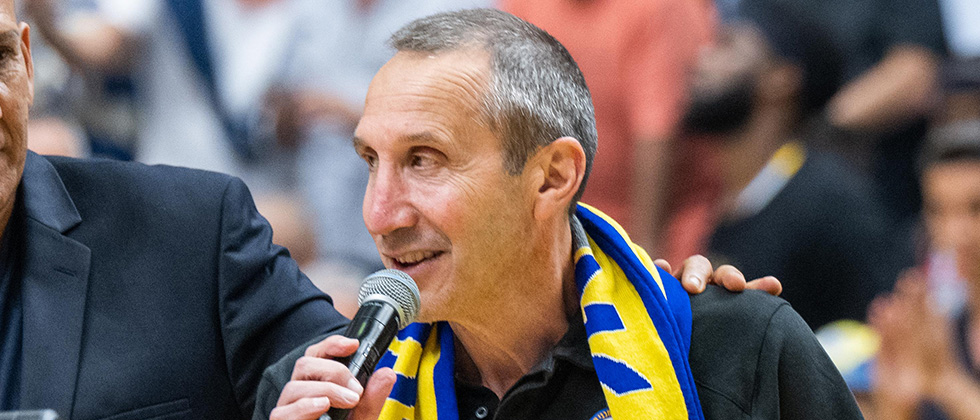

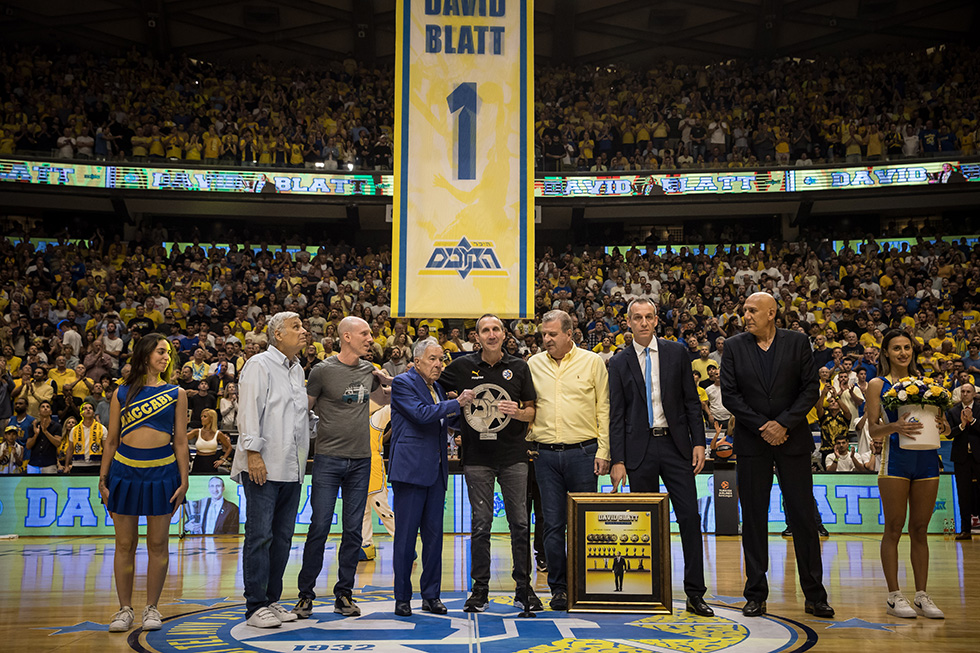
The Chairman of Maccabi’s Professional Committee, David Blatt, held a lengthy video Q&A from the United States with members of the Israeli media. The longtime Maccabist confronted a diverse array of questions about basketball operations and decision making.
Here are some of the main questions and answers:
Oded Kattash spoke about Saben Lee’s contract. What exactly happened there?
“We brought in Saben after Jordan Loyd left, as part of the process we went through, which made the first part of the season very difficult. Saben Lee’s contract explicitly stated that he was not obligated to travel to Israel for games. The hope was that over time, the situation in our dear country would improve, and we could encourage and convince him to come, as that was the intention. It was also his intention when he signed. That didn’t happen, and as a result, he didn’t play in league games or train with us during the week. This situation caused several problems, frustrated the staff, and made things harder for the team. The response was logical and understandable. Sometimes, in very challenging situations, you have to make decisions involving an element of risk. I took one, it didn’t work out, and we paid the price. The goal was to strengthen the team in a short time frame to replace a key player like Loyd, hoping we could also involve him in the league. He was the type of player we needed in terms of style and capabilities, as evidenced by the fact that he helped us win two EuroLeague games. The risk didn’t pay off, and if responsibility needs to be taken, I take it.”
Since Avi Even’s departure, Maccabi has no professional manager. Does your role as Chairman of the Professional Committee include this responsibility? How does it work technically?
“Absolutely yes. For now, it works through the internet and numerous phone calls with everyone. I’ll also be arriving in Israel very soon.”
What are Maccabi’s goals, and what was the reasoning behind releasing Wenyen Gabriel?
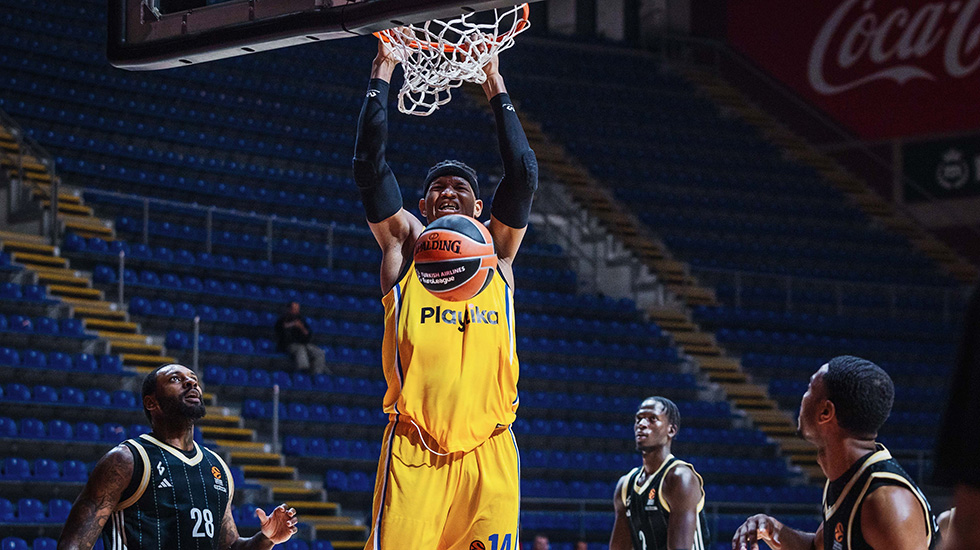
“We want and intend to be as competitive as possible in the EuroLeague. True, our record isn’t good in the EuroLeague standings. There are years like this. Unlike the last two seasons, during which I was involved in a different capacity, the team wasn’t just competitive but also came close to reaching the Final Four. This year, for various reasons, it’s not the case. If I list all the facts, it will sound truthful but also like excuses. I’m not here to make excuses. Real things happened, and we’re far from where we were in the past two seasons as champions and two quarters away from the Final Four. So what do we do? Cry? No. We work hard, fight, make decisions we hope will succeed in the long term, and build a team that will compete both now and in the future. We’ve already taken a step by signing Trevion Williams and releasing Wenyen Gabriel to strengthen the team for both the EuroLeague and the domestic league. Sometimes, trades or moves are made to strengthen immediately or for the future. We’ll make one or two more moves to be as competitive as possible.”
Despite star departures last summer, Maccabi built a roster that doesn’t seem to be good enough for a EuroLeague club like Maccabi Tel Aviv. How did this happen?
“We failed to replace four of the top players in the EuroLeague—that’s a fact. We lost four leading players of the highest caliber in Europe. We had to rebuild, bringing in players with some advantages or potential for the future. This is something every team faces during a rebuild. Factually, it didn’t turn out great. I have no problem taking responsibility. Some of it was due to circumstances—the many injuries we faced, the timing, and having to reassemble every week. It’s easy to say it’s not fitting for Maccabi Tel Aviv’s level. Maybe we could have done things differently if we had the chance, but I’d say that most likely, we couldn’t. These were central players already under contract. For me, today is a fresh start, and we’ll do whatever is needed to bring the team back to the level we’re used to. It takes patience, resilience, and facing challenges. I’ve been through seasons and difficulties. This is part of being at Maccabi Tel Aviv—being ready to deal with it. Now is the time to stay calm and modest and, above all, act to get the ship back on course.”
At what point is it undesirable to bring in a new player?
“It depends on the team’s capabilities and the chemistry among players. That wasn’t the plan initially. When you have an outstanding player who announces that he doesn’t want to stay or can’t stay due to the difficult situation in the country, it’s unexpected, and you need to make a move. We discussed Saben, and we made a move that had immediate results. It didn’t work out, and now we need to make more moves. You can see players who succeeded with us but don’t perform the same elsewhere—that’s part of the business. The staff needs to integrate a player as effectively as possible and hope it yields positive results. I can’t guarantee a 100% success rate, but we need to make every effort to bring in players who will deliver results.”
Can you elaborate on your work with Oded Kattash?
“Oded Kattash is one of the best coaches Maccabi Tel Aviv has ever had, and we’ve had many. What happened? He’s the same coach and the same person. He is so highly regarded and so central to the system. What happened to him is what happened to the entire team amidst the challenges we’ve faced since nearly reaching the Final Four and winning the championship. Some things were beyond his control. When you’re in the role, part of the job is managing and working through the difficulties and making adjustments. The managerial and professional staff must find solutions to support him. We haven’t done a good enough job so far, but certainly not because of the coach. There are better and worse periods, and we must accept that, encourage, and assist. We’re all in the same boat and must fight, invest, improve, and find solutions. Broadly speaking, this is a collective responsibility, and we must work together.”
Is it more difficult this season to bring in American players and proven EuroLeague players—not just due to the war but also because of increased competition?
“Yes, it’s true on both fronts. It’s harder to bring in proven players. We’re facing challenges, and it’s not easy. This is a tough season for many reasons, and the competition makes it even harder. That’s fine, by the way. Personally, I like having competition. I like that we’re being challenged and need to be more competitive and strategic. The competition is stronger, and there are additional challenges. In some cases, we succeeded with players we wanted; in others, we lost the battle—that’s part of the competition. In my opinion, competition and challenges are strengthening, even if not immediately. Over time, it should help.”
Is it fair to say the priority is to secure domestic titles and fight for the EuroLeague in the future?
“Our bread and butter is on the table every year. We always think, want, and build ourselves for the critical domestic competitions to achieve our goals in Israel. Because we are Maccabi Tel Aviv and are accustomed to being in the upper echelon of the EuroLeague, successes in Europe often go beyond expectations. We don’t have our fans in Europe, which is completely unreasonable from a sporting perspective. There are extensive travels that hinder our ability to compete at the level we want in Europe and achieve our goals. We aim to reach the highest levels in everything, and that hasn’t changed. When things don’t go well, we must deal with it, take the criticism, and accept it as part of the job. If you’re part of this, you must be ready to absorb it. We need to work, stay united, and fight for our goals in Israel. In the EuroLeague, we must not stop or give up trying to be the best team we can be. We’ll keep working to maintain Maccabi Tel Aviv’s standard.”
Why weren’t you able to bring top EuroLeague replacements? Will the current situation in Israel prevent Maccabi from competing for top players?
“What’s happening with Israeli sports is significant on multiple levels. I wish for better days for all of us, that we find solutions and live peacefully, calmly, and securely. That’s far more important. Yes, the situation has made it harder for us. But we won’t stop, hide, or make excuses. We need to improve and find solutions to restore the system to what it should be. Believe me, we’re working on it daily. I’m not ignoring the expectations and criticisms. We won’t stop for even a moment in our efforts to get where we want to be.”
How hard is it to convince players to come here during wartime?
“Very difficult, especially in May and June when we started working on this, following the departure of key players. Other teams succeeded in some cases, but not with everyone, and we succeeded with some of the players we wanted. Some left, and some got injured. We’re now in the situation we find ourselves in. What’s happening in Israel is far harder for those outside the world of sports, and we must cope with it. The battle isn’t over; we’re continuing to work.”
What do you value and want to carry forward?
“I want to see the team healthy, first and foremost. Despite all the surrounding challenges, we haven’t yet seen this team at full strength. To me, the most fundamental and difficult issue has been that the players we brought in—who are good—haven’t been healthy. We’ve been strong in games against good teams, but the fuel just runs out. Everyone wants results, and I get that. But sometimes, the car simply has no gas, and you stop. This isn’t an excuse—it’s a fact. December is particularly tough due to the schedule, travel, games, and the quality of opponents we face while missing 20–30% of the roster.”
“I knew it would be a tough month, but complaining or making excuses isn’t the way. We need to take charge, make adjustments, and improve—in the roster, basketball, and management. The question is, where do we go from here? There are good players at Maccabi and a very strong system. This isn’t the first time we’ve faced difficulty. Being depressed doesn’t help. We need to move forward, start the new year, and do what’s needed to get where we want to go.”